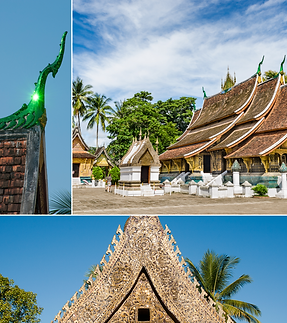
Wat Xieng Thong
Welcome to Wat Xieng Thong, one of Lao PDR’s most treasured cultural and spiritual landmarks. Situated at the historic confluence of the Mekong and Nam Khan rivers in Luang Prabang, this revered temple stands as a masterpiece of classical Lao architecture and a living center of Buddhist tradition. We invite you to explore its rich history, artistic heritage, and enduring spiritual significance
Wat Xieng Thong – Simple History with More Description
Wat Xieng Thong is one of the most important and best-preserved Buddhist temples in Laos. It is located in Luang Prabang, at the place where the Mekong and Nam Khan rivers meet. For more than 450 years, this temple has been a spiritual center, a royal place, and a symbol of Lao culture and history.
Foundation and Early History (1500s)
Wat Xieng Thong was built in 1560 by King Setthathirath, one of the greatest kings of the Lan Xang Kingdom, the ancient Lao state. The king chose this beautiful river spot because it was peaceful, sacred, and perfect for worship.
The temple was meant to be a royal monastery — a special place for the king, monks, and important ceremonies. Back then, Buddhism was not only a religion but also part of how the country was run. Major events like ordination of monks and state rituals took place here.
Role During the Lan Xang Kingdom (1500s–1700s)
During the strongest period of the Lan Xang Kingdom, Wat Xieng Thong was deeply connected with the Lao kings. It became the place where:
-
Royal festivals were held
-
Kings were honored
-
Important spiritual rites happened
The temple itself evolved in design. Lao builders added beautiful tiered roofs, intricate carvings, and colorful decorations — features now known as classic Luang Prabang temple style.
Hard Times and Renewal (1700s–1800s)
When the Lan Xang Kingdom broke apart in the 1700s, Laos faced wars and rival leaders. Many places were damaged, but Wat Xieng Thong survived because people respected it deeply.
In the 1800s, the royal family in Luang Prabang began restoring the temple. They repaired buildings, repainted murals, and kept the temple active as a place of worship.
French Colonial Period (1893–1953)
When Laos became part of French Indochina, Wat Xieng Thong still mattered. The French helped with preservation projects to protect its artistic treasures and record its history.
Even under foreign rule, the temple remained a living religious site where local Lao people continued to pray, celebrate festivals, and keep their traditions alive.
Modern Era and Preservation (1953–Today)
After Laos became independent in 1953, Wat Xieng Thong continued its spiritual role. In 1995, UNESCO named Luang Prabang a World Heritage Site, recognizing the city’s unique cultural history — and Wat Xieng Thong is one of its most cherished monuments.
Since then, Lao authorities with international partners have worked to:
✔ Restore murals and statues
✔ Repair temple roofs and structures
✔ Train local guides and monks in heritage care
✔ Manage tourism with respect for religion and culture
What Wat Xieng Thong Means Today
Today, Wat Xieng Thong is still an active temple where monks live and pray. At the same time, people from all over the world visit to admire its:
🌟 stunning architecture
🌟 ancient murals
🌟 rich symbolism
🌟 peaceful riverside setting
It shows how Laos has kept its traditions alive, even through wars and change.
Visiting Wat Xieng Thong – Price & Experience
When you visit Wat Xieng Thong, here’s what to expect:
Entrance Fee
-
Adults: around 30,000–50,000 LAK (about $3–$5 USD)
-
Children: usually cheaper or free (prices can change depending on tourism policies)
What’s Included
✔ Access to the main temple area
✔ Traditional architecture and rooftop views
✔ Historic murals and shrine halls
Tips for Visiting
-
Dress modestly (shoulders and knees covered)
-
Visit early morning or late afternoon for cooler weather
-
Respect monks and people praying
-
Best time for photos is around sunrise or sunset
In Summary
Wat Xieng Thong is more than a temple — it is a symbol of Lao identity. From its royal beginnings in the 1500s to its role today as a living place of faith and history, the temple shows how Laos treasures its culture and spirituality.